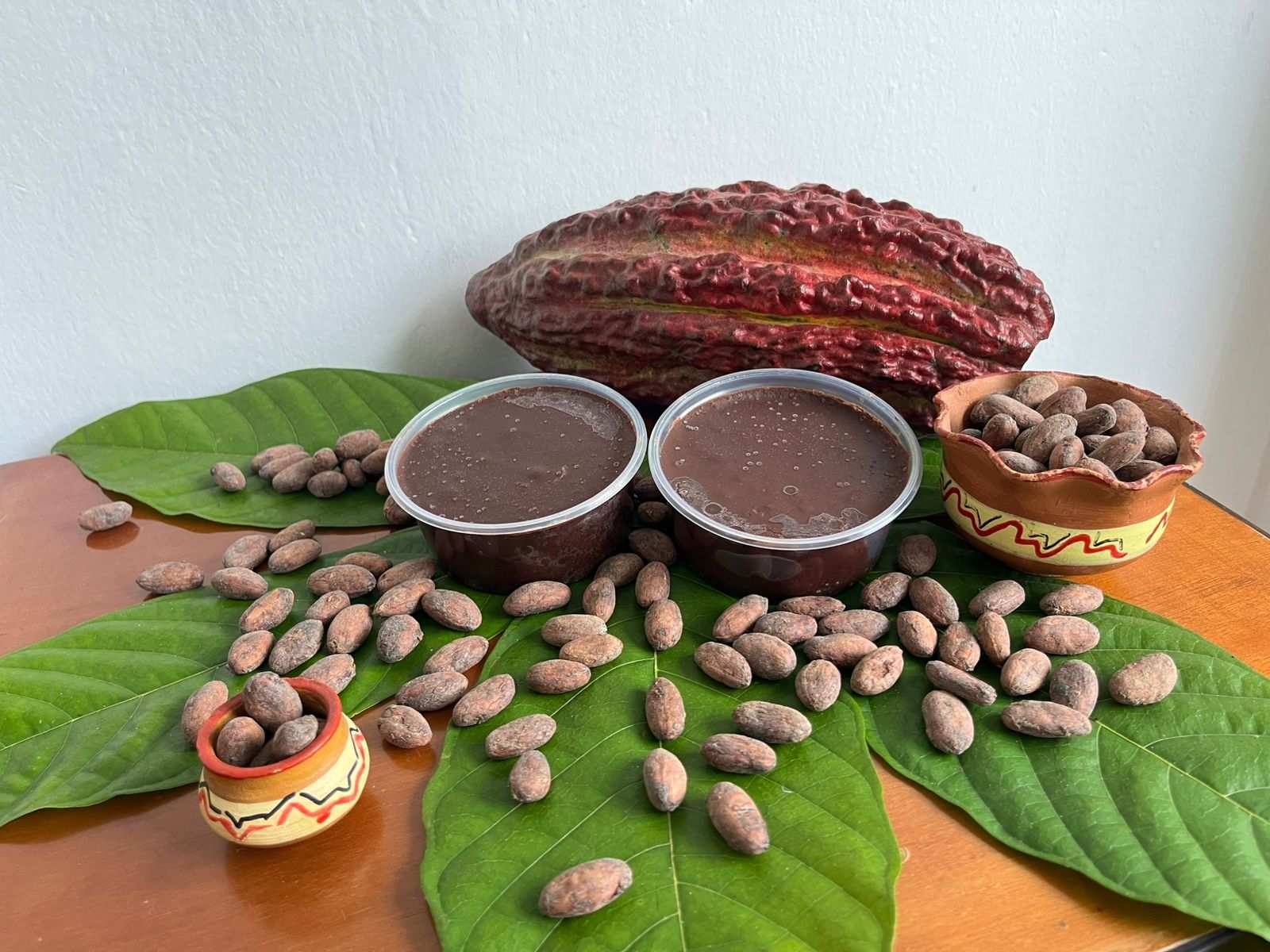
Hacer chocolate en casa es más sencillo de lo que parece, y el resultado es incomparablemente mejor que cualquier tableta industrial. El ingrediente clave es la pasta de cacao puro —también llamada licor de cacao o masa de cacao— que no es más que el grano de cacao fermentado, tostado y molido hasta convertirse en una pasta densa, sin ningún aditivo.
Con pasta de cacao de buena calidad, solo necesitas tres cosas más: un endulzante, calor y paciencia. En este artículo te explicamos el proceso básico y varias variaciones para que experimentes en tu cocina.
¿Qué es la pasta de cacao y cómo se diferencia del chocolate?
La pasta de cacao es 100% cacao: contiene tanto la manteca de cacao (la grasa natural del grano) como los sólidos del cacao. A temperatura ambiente es sólida; al calentarla se vuelve líquida. Tiene un sabor intensamente amargo y astringente —exactamente igual que el cacao en su estado más puro.
El chocolate, en cambio, es pasta de cacao mezclada con azúcar, leche (en el caso del chocolate con leche) y, opcionalmente, manteca de cacao adicional para suavizar la textura. Fabricarlo en casa te permite controlar exactamente qué entra y qué no.
Ingredientes para chocolate negro 80%+
- 100 g de pasta de cacao puro (Fundo Maranatha)
- 20–30 g de manteca de cacao (opcional — suaviza la textura y da más brillo)
- 2–4 cucharadas de miel de abeja, panela o eritritol al gusto
- 1 pizca de sal (resalta el sabor del cacao)
- Aromas opcionales: vainilla natural, ralladura de naranja, canela
Paso a paso: receta básica
Paso 1 — Derretir la pasta al baño maría
Trocea la pasta de cacao y ponla en un bol de vidrio o acero inoxidable sobre una olla con agua caliente (no hirviendo). Remueve suavemente hasta que se derrita por completo. La temperatura ideal es entre 45 y 50°C — nunca la pongas a fuego directo ni en el microondas sin cuidado, porque el cacao quema fácilmente.
Paso 2 — Añadir manteca y endulzante
Si usas manteca de cacao, derrítela por separado o añádela al mismo baño maría. Incorpórala a la pasta líquida con movimientos lentos. Agrega tu endulzante de preferencia y mezcla hasta integrar completamente. Prueba y ajusta el dulzor.
Paso 3 — Temperado básico (opcional pero recomendado)
El temperado es el proceso que da al chocolate ese acabado brillante y ese "snap" característico al partirlo. Para un temperado casero simple: retira el bol del baño maría y remueve la mezcla mientras enfría hasta unos 27°C, luego vuelve a llevarla al baño maría brevemente hasta los 31-32°C. Este ciclo alinea los cristales de manteca de cacao.
Si no te importa el acabado visual, puedes saltarte este paso.
Paso 4 — Verter en moldes y refrigerar
Vierte el chocolate en moldes de silicona, un recipiente forrado con papel vegetal o directamente en una bandeja. Golpea suavemente para eliminar burbujas. Lleva al refrigerador durante 1–2 horas hasta que solidifique por completo.
Variaciones fáciles
Chocolate con miel y nueces
Sustituye el endulzante por miel de abeja pura (1 cucharada por cada 50 g de pasta) y añade nueces o almendras troceadas antes de verter en los moldes. La miel aporta notas florales que complementan perfectamente el cacao de San Martín.
Chocolate con ralladura de naranja
Añade la ralladura de media naranja por cada 100 g de pasta. La combinación naranja-cacao es un clásico que nunca falla.
Chocolate con especias
Una pizca de canela, kion (jengibre) o pimienta de cayena transforma completamente el perfil del chocolate. Empieza con cantidades pequeñas y ve ajustando al gusto.
Bebida de cacao caliente
Disuelve 1–2 cucharaditas de pasta de cacao rallada en agua o leche caliente (no hirviendo). Endulza al gusto. Es el equivalente casero del chocolate caliente, pero con el sabor real del cacao puro — sin leche en polvo, sin colorantes, sin nada extra.
Pasta de cacao 100% puro de San Martín
Nuestra pasta se elabora con granos Trinitario de San Martín, fermentados y tostados artesanalmente. Sin aditivos, sin azúcar, sin conservantes. Disponible en 150 g, 200 g, 1 kg, 5 kg y más.
Pedir pasta de cacaoConsejos para obtener el mejor resultado
- Usa pasta de origen conocido: el sabor del chocolate final depende directamente de la calidad del cacao. Un cacao bien fermentado produce un chocolate con notas complejas; uno mal fermentado da un chocolate ácido o astringente.
- No uses agua: una sola gota de agua puede hacer que el chocolate se apelmace y pierda su textura. Todo el equipo debe estar completamente seco.
- Guarda en lugar fresco y seco: el chocolate casero, sin conservantes, se conserva bien hasta 3 semanas en un lugar fresco o hasta 2 meses en refrigerador.
- Experimenta con el dulzor: la pasta de cacao puro es muy amarga. El nivel de dulzor es completamente personal — lo que importa es que el cacao sea el protagonista.
Ver también: nuestra página de productos para conocer todas las presentaciones disponibles de pasta de cacao.