The term "superfood" has no official definition in the medical literature, but there is scientific consensus on what justifies it: exceptional density of nutrients and bioactive compounds per calorie, backed by evidence of measurable health benefits. By that standard, pure cacao not only meets the requirement — it surpasses it dramatically compared to many foods that typically lead that category.
What makes cacao different?
The key is that pure cacao simultaneously concentrates three categories of bioactive compounds that are rarely found together in a single food:
The key difference: none of the other popular "superfoods" — blueberries, green tea, chia, avocado — presents all three groups simultaneously. Cacao is unique in that regard.
Antioxidant capacity comparison
A study by Pellegrini et al. (2003), published in the Journal of Nutrition, measured the total antioxidant capacity (FRAP) of dozens of foods. Unsweetened cocoa powder scored 140.4 mmol/100 g — a value 10 to 40 times higher than foods that normally top these rankings.
Full nutrient comparison table
The following values correspond to 100 g of each food in its natural form (unprocessed). Source: USDA FoodData Central.
| Nutrient | Cacao nibs | Blueberries | Green tea* | Chia seeds | Spinach | Avocado |
|---|---|---|---|---|---|---|
| Magnesium | 272 mg | 6 mg | 3 mg | 335 mg | 79 mg | 29 mg |
| Iron | 6.3 mg | 0.3 mg | 0.1 mg | 7.7 mg | 2.7 mg | 0.6 mg |
| Fibre | 9 g | 2.4 g | — | 34 g | 2.2 g | 6.7 g |
| Protein | 12 g | 0.7 g | 0.2 g | 17 g | 2.9 g | 2.0 g |
| Zinc | 3.8 mg | 0.2 mg | 0.03 mg | 4.6 mg | 0.5 mg | 0.6 mg |
| Flavanols | Very high | Medium | Medium | Low | Low | Low |
| Theobromine | Yes | No | No | No | No | No |
| Healthy fats | ~40 g | 0.3 g | 0.1 g | 31 g | 0.4 g | 15 g |
*Prepared green tea infusion. Source: USDA FoodData Central, 2024.
The processing trap: not all cacao is equal
⚠ Essential condition the data above assumes: all of this applies to non-industrially processed cacao. The alkalisation process (Dutch process) used by most commercial brands to soften the flavour and darken the colour can reduce flavanols by up to 60%.
The result is that supermarket cocoa powder and most commercial chocolates contain a minimal fraction of the bioactive compounds that appear in studies. This is why provenance and minimal processing are not a marketing argument — they are a necessary condition for the properties to be real.
How much is needed to see an effect?
Studies show effects with relatively small and consistent doses. One tablespoon of nibs per day (~10–15 g) provides:
The dose is not massive, but consistency — combined with the absence of sugar and processing — is what distinguishes nibs from any commercial "cacao" supplement.
Pure cacao of known origin
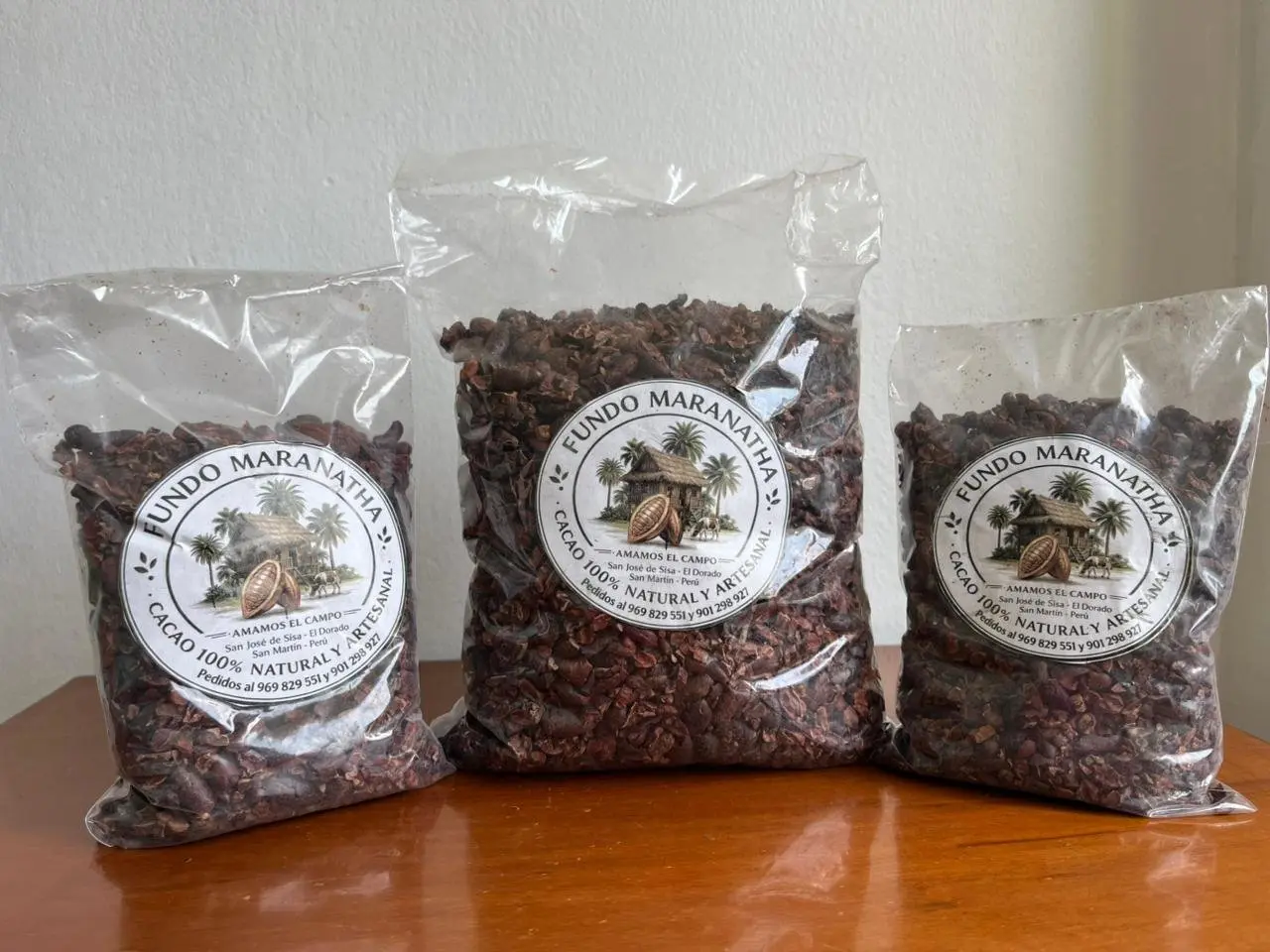
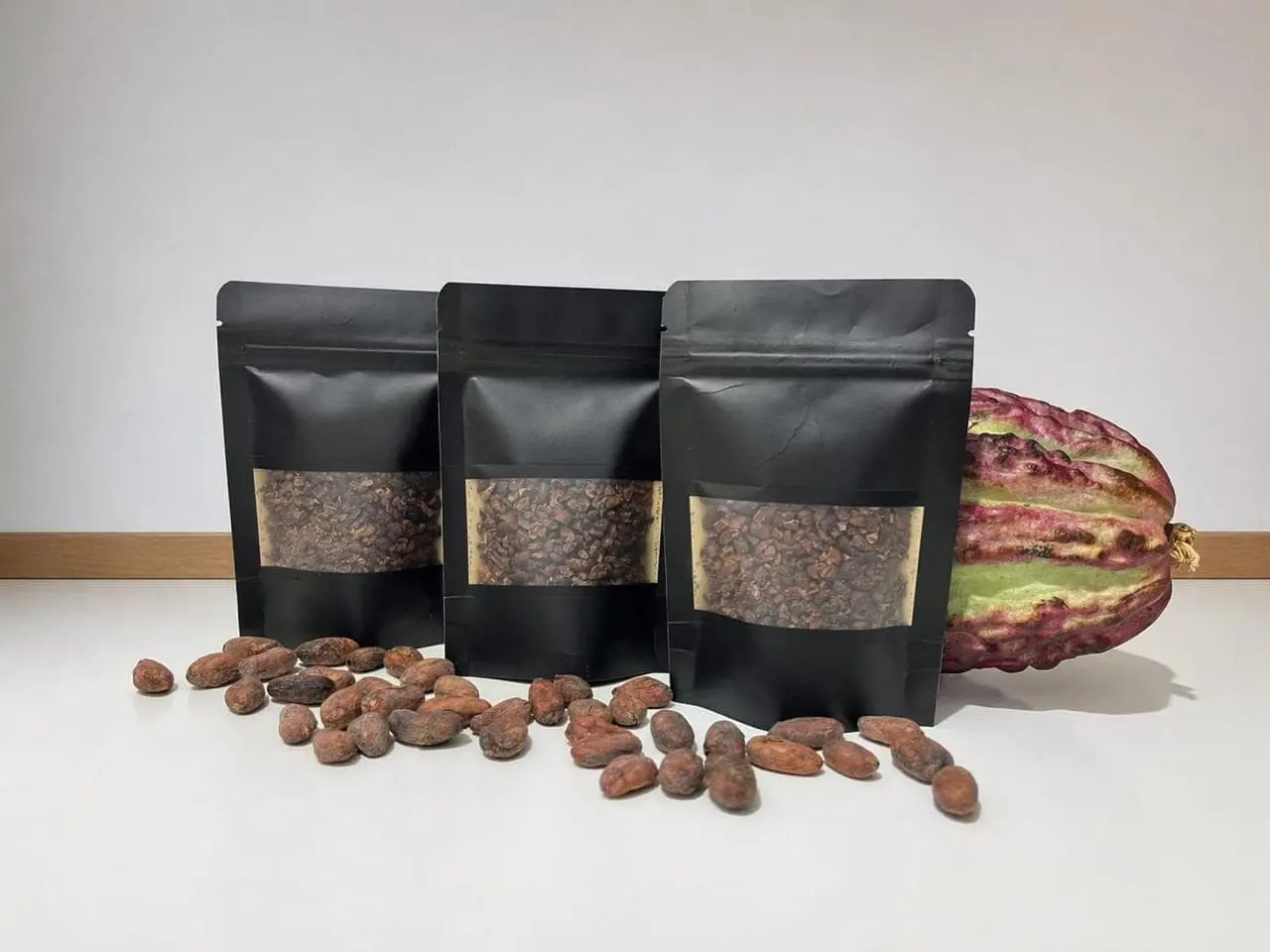
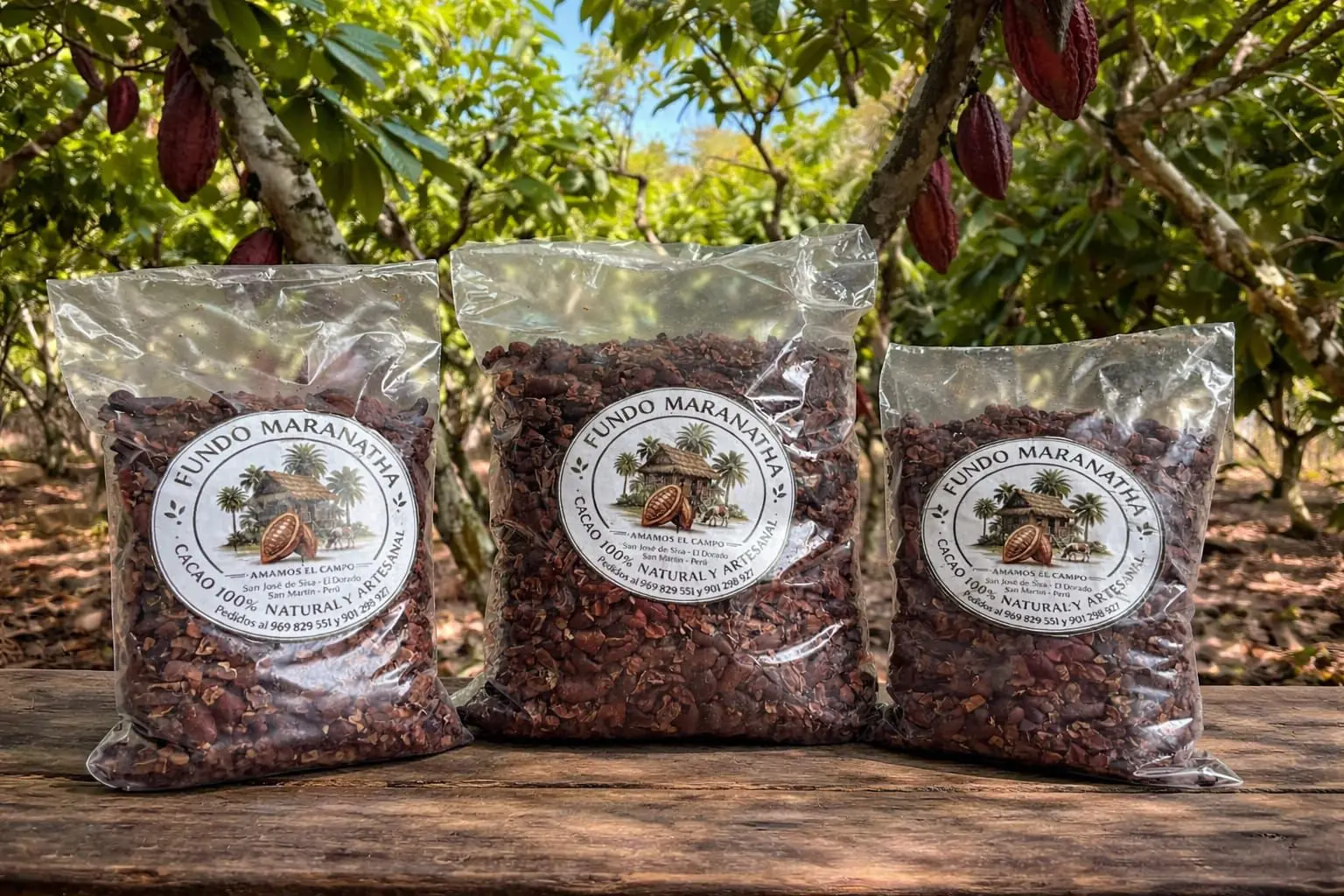
Our nibs and cacao paste are minimally and artisanally processed. No alkalisation, no sugar, no additives. Full traceability from San Martín, Peru.
See nibs and cacao paste See products →Note: this article is for informational purposes and does not replace guidance from a health professional. The properties described apply to pure cacao without sugar and without industrial processing.