Guide · Recipes
Natural vs Alkalized Cacao Powder: How to Choose and Use It (with 3 Recipes)
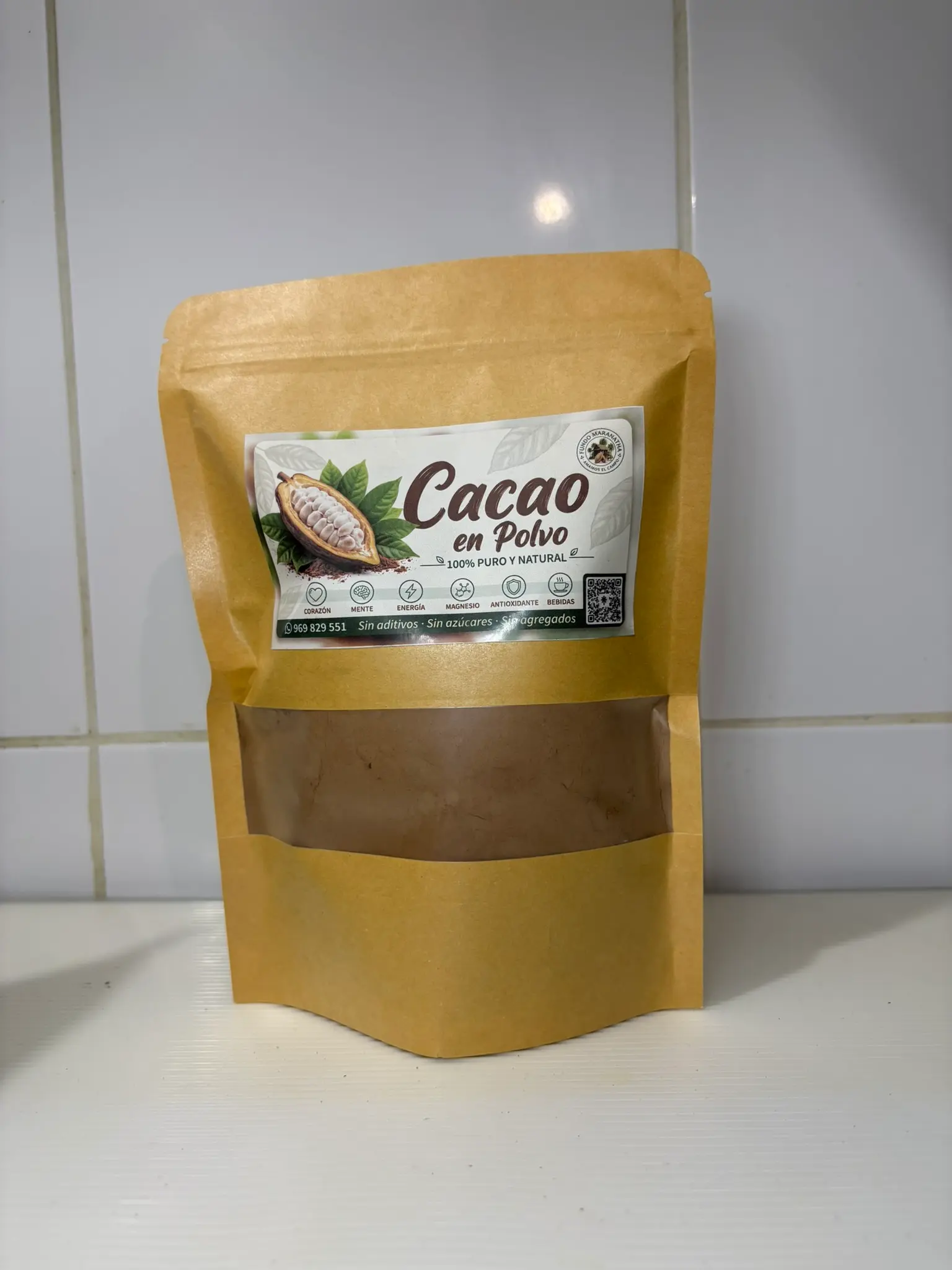
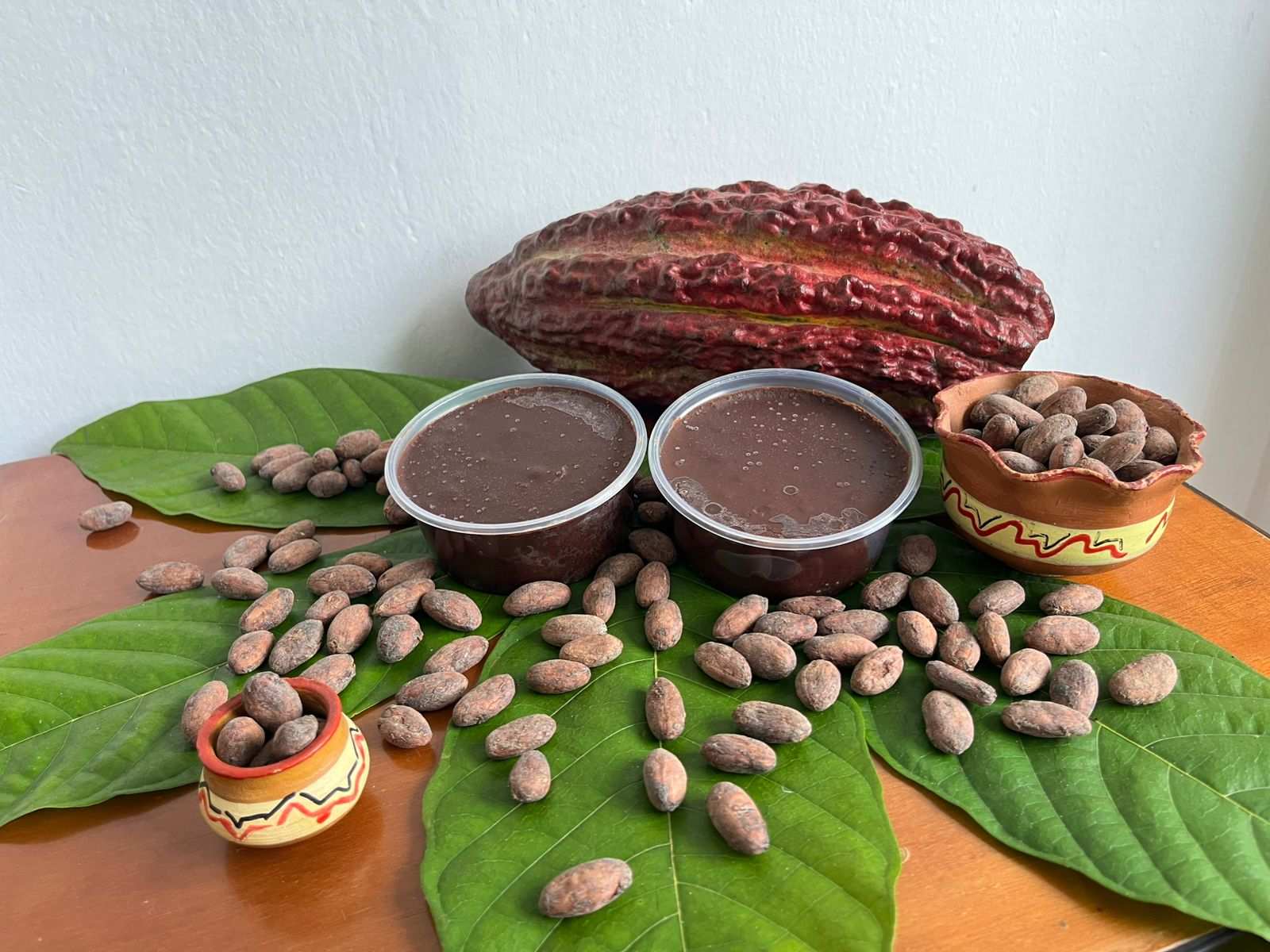
At the store you'll see “cacao powder”, “cocoa” or “unsweetened cocoa”, and they look the same. They aren't. The big difference is a step almost nobody mentions: alkalization. It changes the color, the flavor, how the powder behaves in your recipes and, above all, how many flavanols it keeps. In this guide to natural vs alkalized cacao powder we explain how to choose one, plus 3 easy recipes.
What is alkalization (or “Dutch processing”)?
It's a treatment with an alkaline solution, usually potassium carbonate, applied to cacao beans, liquor or powder to lower its acidity. It was invented in the Netherlands in the 19th century, hence the name “Dutch”, and much of the industry uses it today.
The result is a darker, milder powder that dissolves more easily in milk. The cost: it loses much of its flavanols, the antioxidants that give cacao its healthy reputation. A study of 19 commercial brands found that natural cocoa averaged 34.6 mg/g of flavanols, while alkalized cocoa had between 13.8 and 3.9 mg/g depending on how intense the process was.
Natural vs alkalized, side by side
| Natural | Alkalized | |
|---|---|---|
| Color | Light, slightly reddish brown | Dark brown, almost black |
| Flavor | Intense, fruity, a little acidic | Mild, less bitter |
| Acidity | Acidic (pH around 5.5) | Neutral or alkaline (pH 7 to 8) |
| Flavanols | Keeps them | Loses about 60% to 89% |
| In drinks | Best dissolved first in a little liquid | Dissolves more easily |
| In baking | Reacts with baking soda and helps it rise | Used with baking powder |
| Label | A single ingredient: cacao | “Processed with alkali”, “Dutch” or E501 |
How to read the label in 10 seconds
- Ingredients: natural cacao powder has a single ingredient, cacao.
- Signs of alkalization: “processed with alkali”, “alkalized”, “Dutch process” or an additive such as potassium carbonate (E501).
- If the first ingredient is sugar, it isn't cacao powder: it's a drink mix.
- An almost black color usually means heavy alkalization.
💡 Cacao or cocoa? The words are often used interchangeably, but boxed “cocoa” is usually alkalized and sometimes sweetened. We explain it in cacao vs cocoa: what's the real difference.
Which one should you choose?
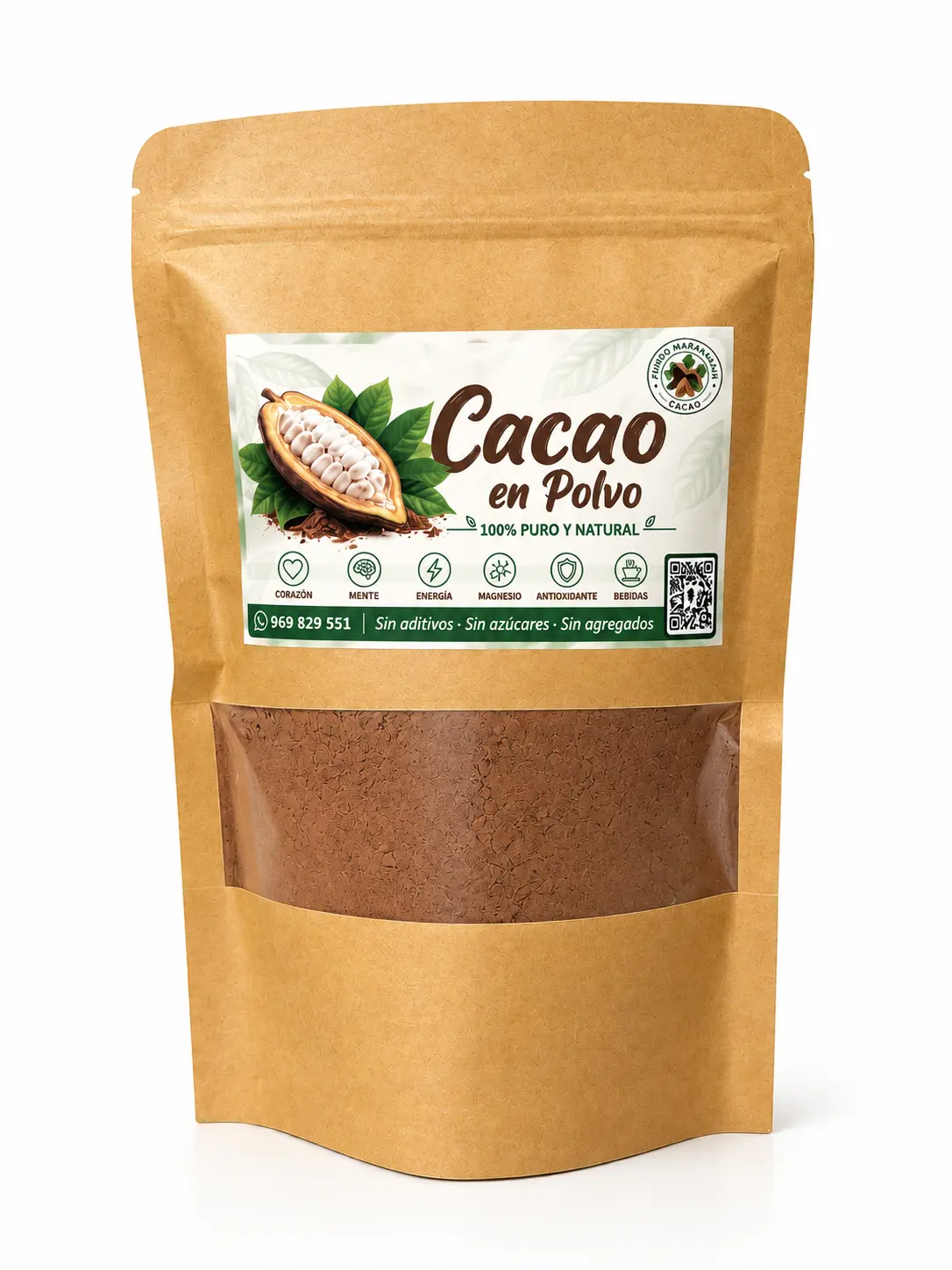
Fundo Maranatha cacao powder is natural: it goes through no alkaline process and has no sugar or additives. We make it from our own cacao from San José de Sisa (San Martín), fermented in wooden boxes and roasted on the farm.
3 easy recipes with natural cacao powder
1. Hot chocolate in 5 minutes
Makes 1 cup:
- 1½ tablespoons (about 10 g) natural cacao powder
- 1 to 2 teaspoons sugar or panela, to taste
- 250 ml milk or plant-based milk
- A pinch of salt and, if you like, cinnamon or clove
- Mix the cacao and sugar in the cup with 2 or 3 tablespoons of hot milk until you get a smooth paste.
- Heat the rest of the milk without letting it boil hard.
- Pour the milk over the paste little by little, whisking. Add the salt and spices.
2. Creamy cacao and banana oatmeal
Makes 1 serving:
- ½ cup (40 g) rolled oats
- 1 cup (250 ml) milk or water
- 1 tablespoon (6 g) natural cacao powder
- 1 ripe banana and a pinch of cinnamon
- To top: cacao nibs, fruit or nuts
- Cook the oats with the milk over medium heat for 5 minutes, stirring.
- Add the cacao and half the banana, mashed; cook 2 more minutes.
- Serve with the rest of the banana sliced and the nibs on top. The ripe banana sweetens it with no added sugar.
3. Moist cacao cake (with baking soda)
For a 20 cm pan:
- 180 g flour and 40 g natural cacao powder
- 1 teaspoon baking soda and ½ teaspoon salt
- 150 g sugar
- 2 eggs and 120 ml vegetable oil
- 180 ml milk with 1 tablespoon vinegar or lemon juice (let it sit 5 minutes)
- 120 ml hot water
- Preheat the oven to 175°C and grease the pan.
- In a bowl, mix the flour, cacao, baking soda and salt.
- In another bowl, beat the eggs with the sugar, oil and soured milk.
- Combine both mixtures and add the hot water last. The batter will be runny: that's normal.
- Bake for 30 to 35 minutes, until a toothpick comes out clean.
💡 Why it works: the acidity of natural cacao and of the soured milk reacts with the baking soda and makes the cake rise. If you use alkalized cocoa, swap the baking soda for 2 to 3 teaspoons of baking powder.
Bonus: brownies with natural cacao powder
Natural cacao powder also makes rich, moist brownies, like this one we baked with our cacao powder. For an even more chocolatey version, try our brownie recipe with cacao paste.
100% natural cacao powder, from our farm to your kitchen
No alkaline processing, no sugar and no additives. Available in 250 g (S/ 18), 500 g (S/ 30) and 1 kg (S/ 55). Delivery in Lima and shipping across Peru.
Order on WhatsApp Go to product →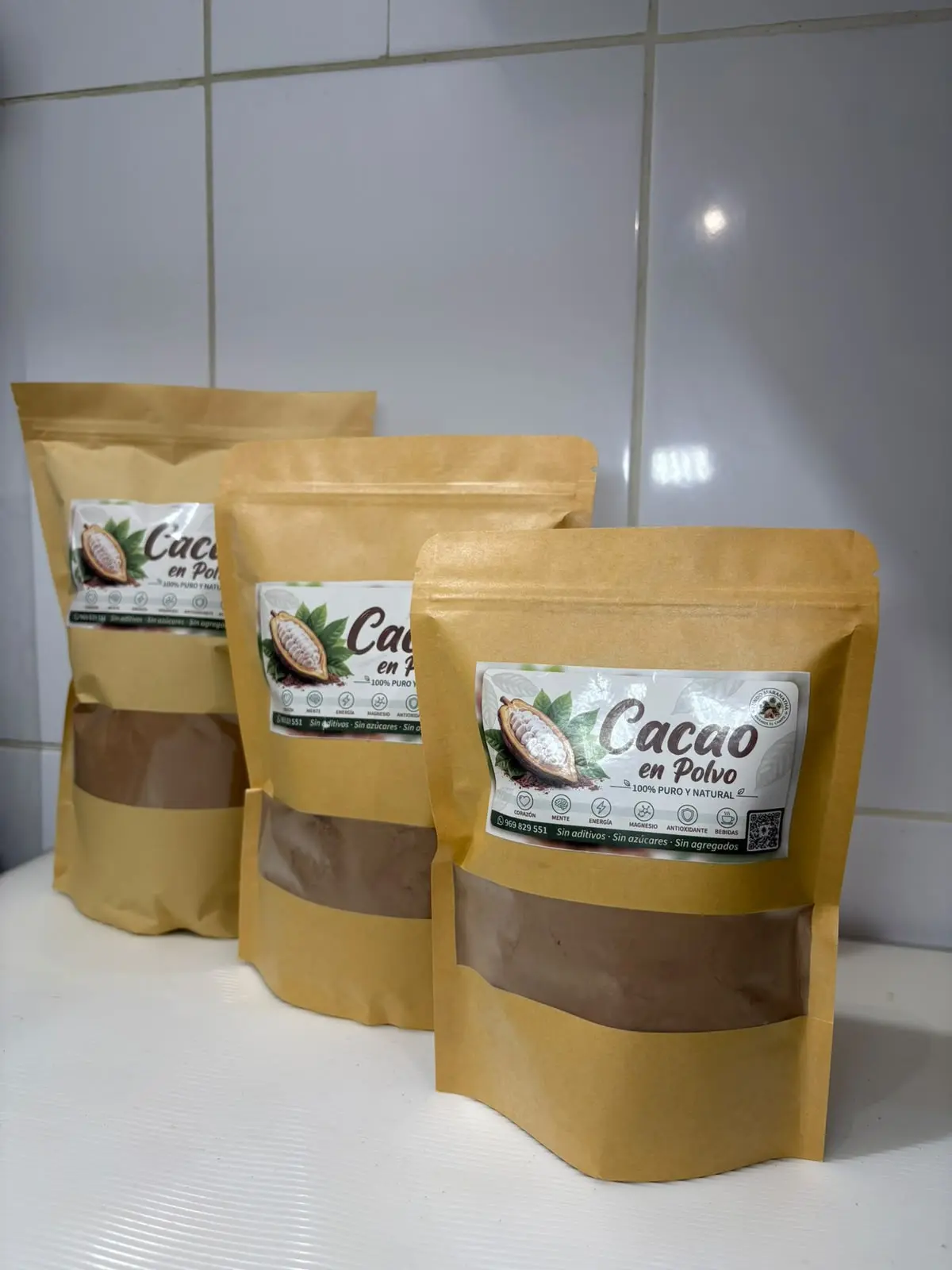
Wondering which other cacao products suit you? Check our guide to choosing your cacao product or read about the health benefits of pure unsweetened cacao.
Sources
- Miller, K. B. et al. (2008). Impact of alkalization on the antioxidant and flavanol content of commercial cocoa powders. Journal of Agricultural and Food Chemistry 56(18): 8527–8533. pubmed.ncbi.nlm.nih.gov
- Andres-Lacueva, C. et al. (2008). Flavanol and flavonol contents of cocoa powder products: influence of the manufacturing process. Journal of Agricultural and Food Chemistry 56(9): 3111–3117.
- EFSA (2012). Scientific Opinion on the substantiation of a health claim related to cocoa flavanols and maintenance of normal endothelium-dependent vasodilation. EFSA Journal 10(7): 2809. efsa.europa.eu
Keep reading