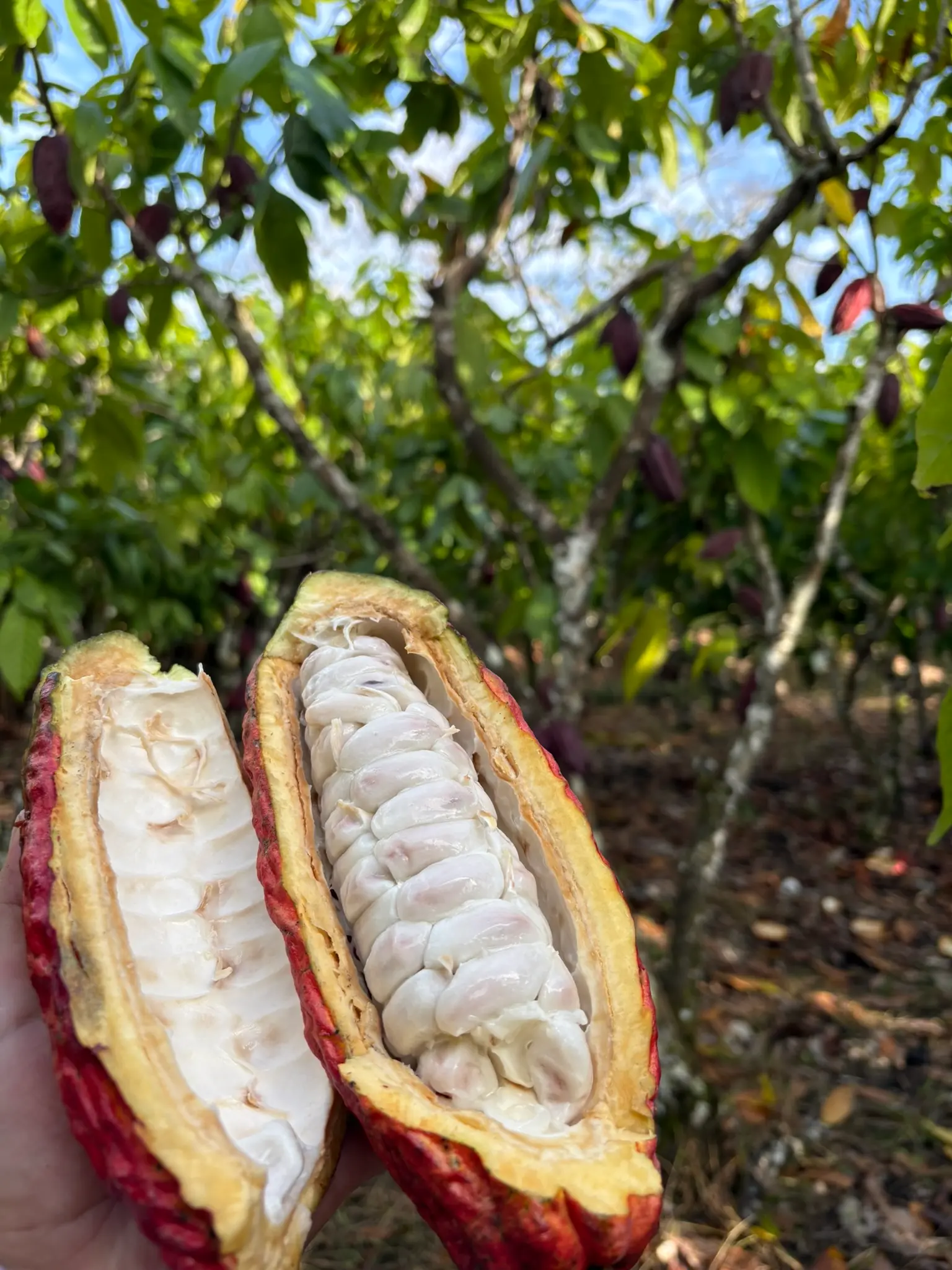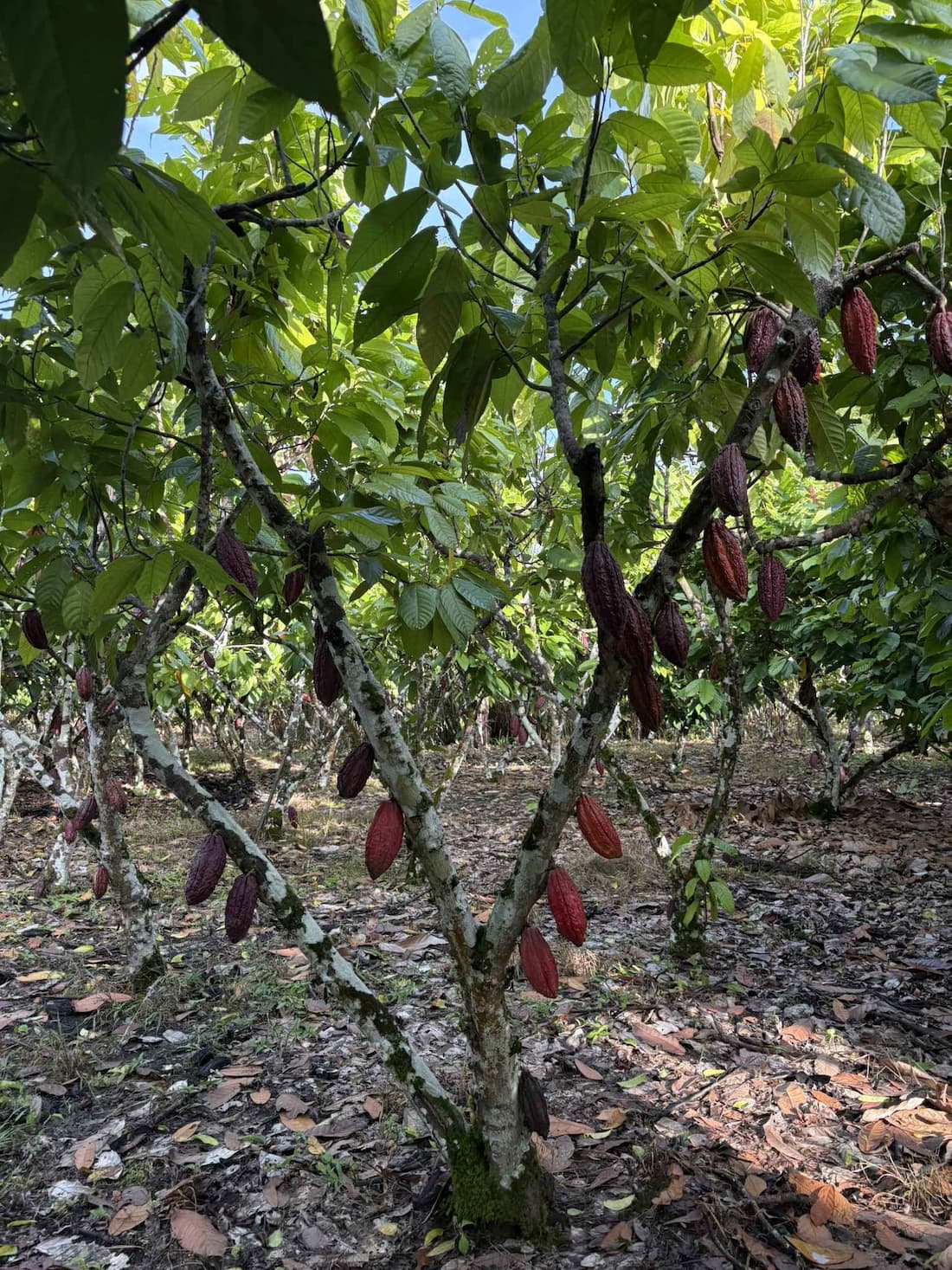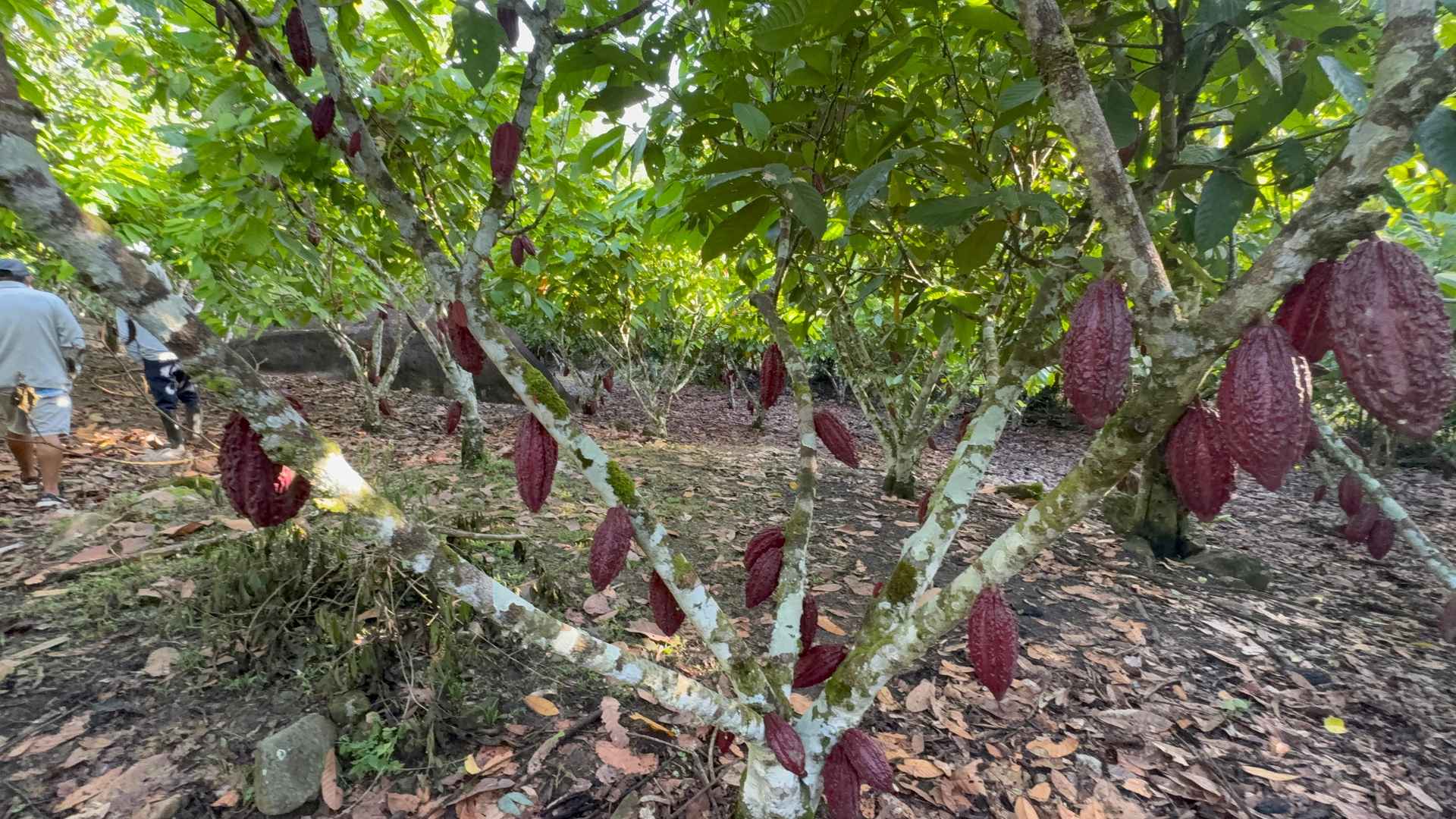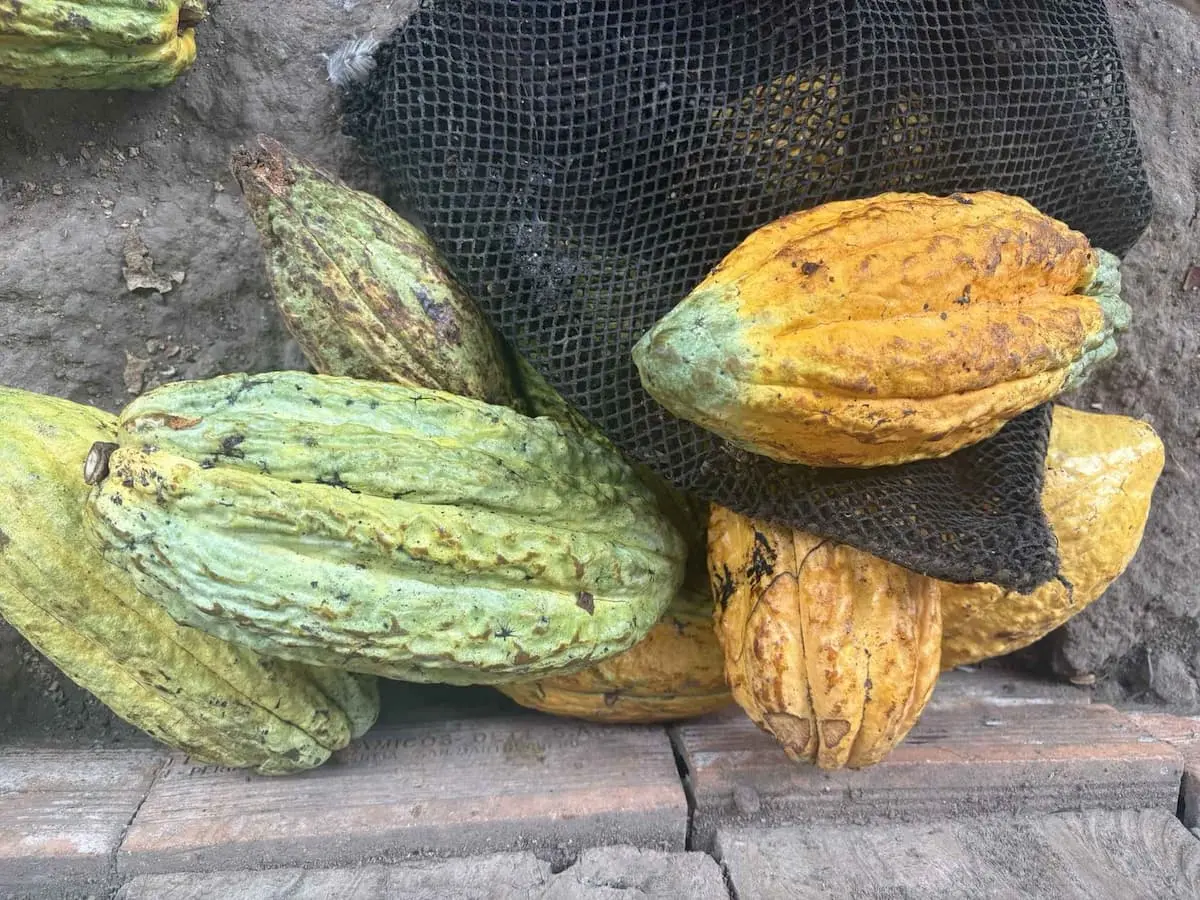
💡 Do you know why truly good cacao doesn't need sugar to taste amazing? It is not magic or a special genetic variety. It is the process that happens in the days after harvest, before the cacao ever reaches a roaster. Our cacao is different because we ferment it ourselves in artisan wooden boxes — the step that separates cacao that surprises from cacao that just tastes bitter.
Bitter cacao is not inevitable. In most cases it is the result of poor or nonexistent fermentation. What separates cacao that surprises from one that simply "tastes bitter" is the process that takes place in the days immediately after harvest. At Fundo Maranatha, that process is our wooden box.
1. Why does raw cacao taste bitter?
The cocoa bean freshly extracted from the pod does not have the flavor we associate with chocolate. It is acidic, astringent and bitter. This is due to natural compounds present in the bean: tannins, organic acids and alkaloids like theobromine. Without proper fermentation, these compounds remain intact and dominate the final flavor profile.
According to the ICCO (International Cocoa Organization), fermentation is the most critical post-harvest step for flavor development and fine cocoa quality. Without it, even the best genetic varieties produce a commercially flat or unpleasant bean.
2. The wooden box: the heart of our process
At Fundo Maranatha we use wooden boxes built specifically for cocoa fermentation. Wood has an essential role: it allows minimal oxygen circulation, retains the heat generated by microbial activity and absorbs part of the acidity from the process. It is not an aesthetic detail — it is ancestral technology validated by science.
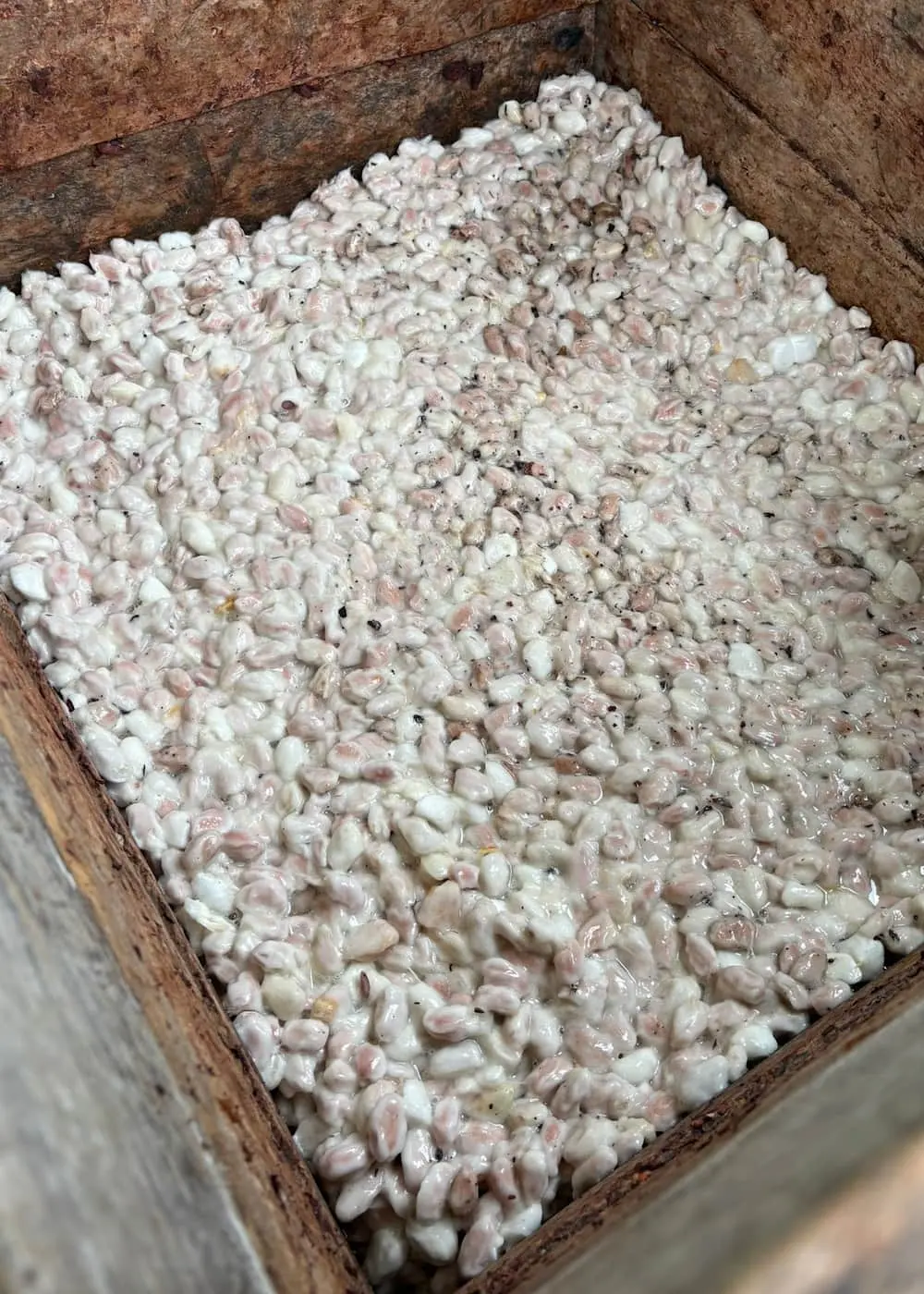
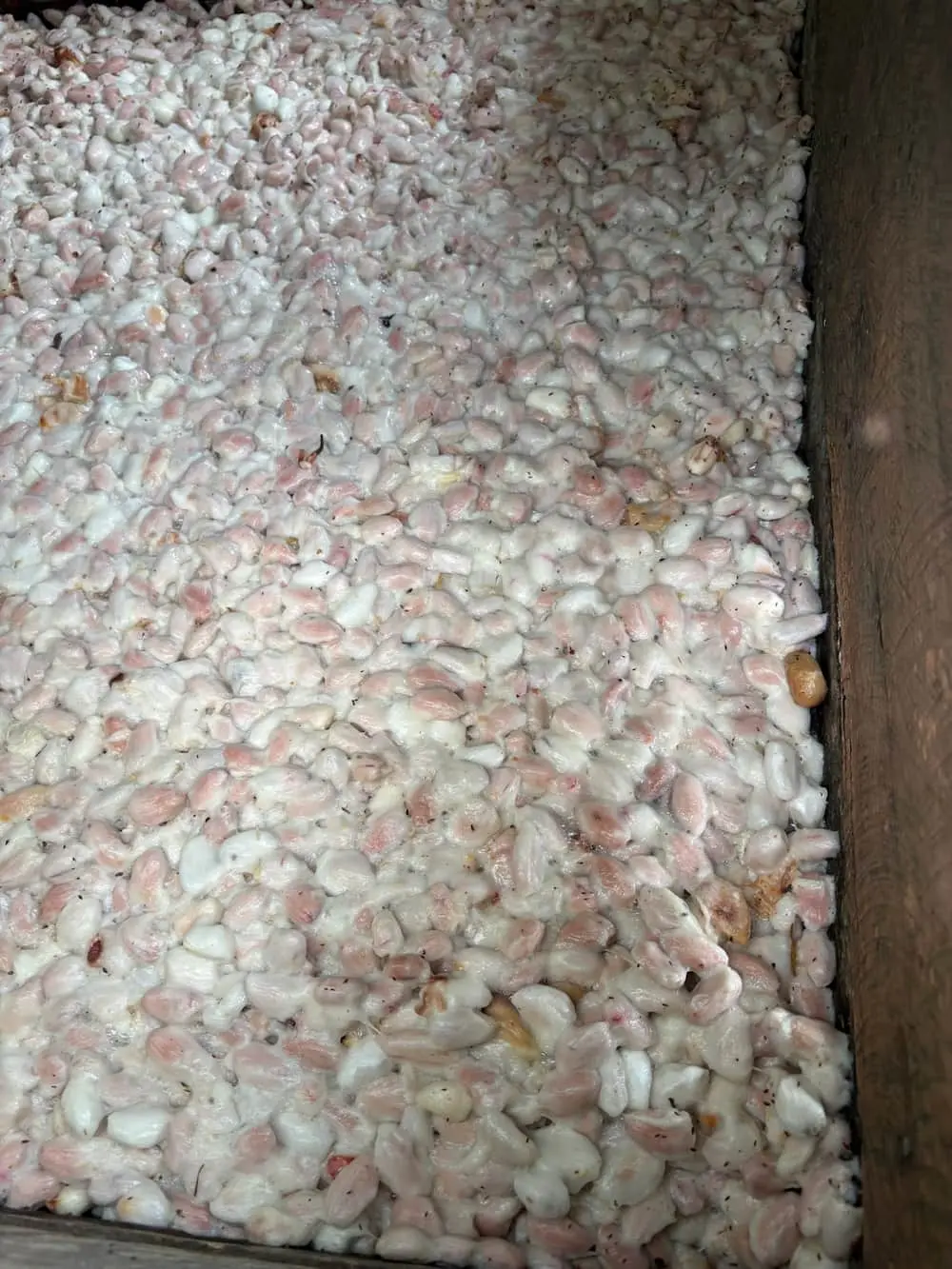
The process works like this: once the pods are harvested, we extract the beans with their pulp (the white mucilage that covers them) and place them in the boxes. That sweet pulp is the starting point of fermentation: natural yeasts present in the environment begin to break it down.
3. The complete process: from pod to dry bean
The pods are opened and the beans extracted with their white pulp (mucilage). That sweet pulp is the starting point of fermentation.
Natural yeasts convert the pulp sugars into alcohol. The wooden box retains the heat and moisture needed for this phase.
Lactic and acetic acid bacteria take over. Box turnings introduce oxygen. Alcohol transforms into acids that penetrate the bean and generate aroma precursors.
The bean finishes developing its flavor precursors. Under 5 days = underfermented (bitter, acidic). Over 8 days = overfermented (loses fine notes).
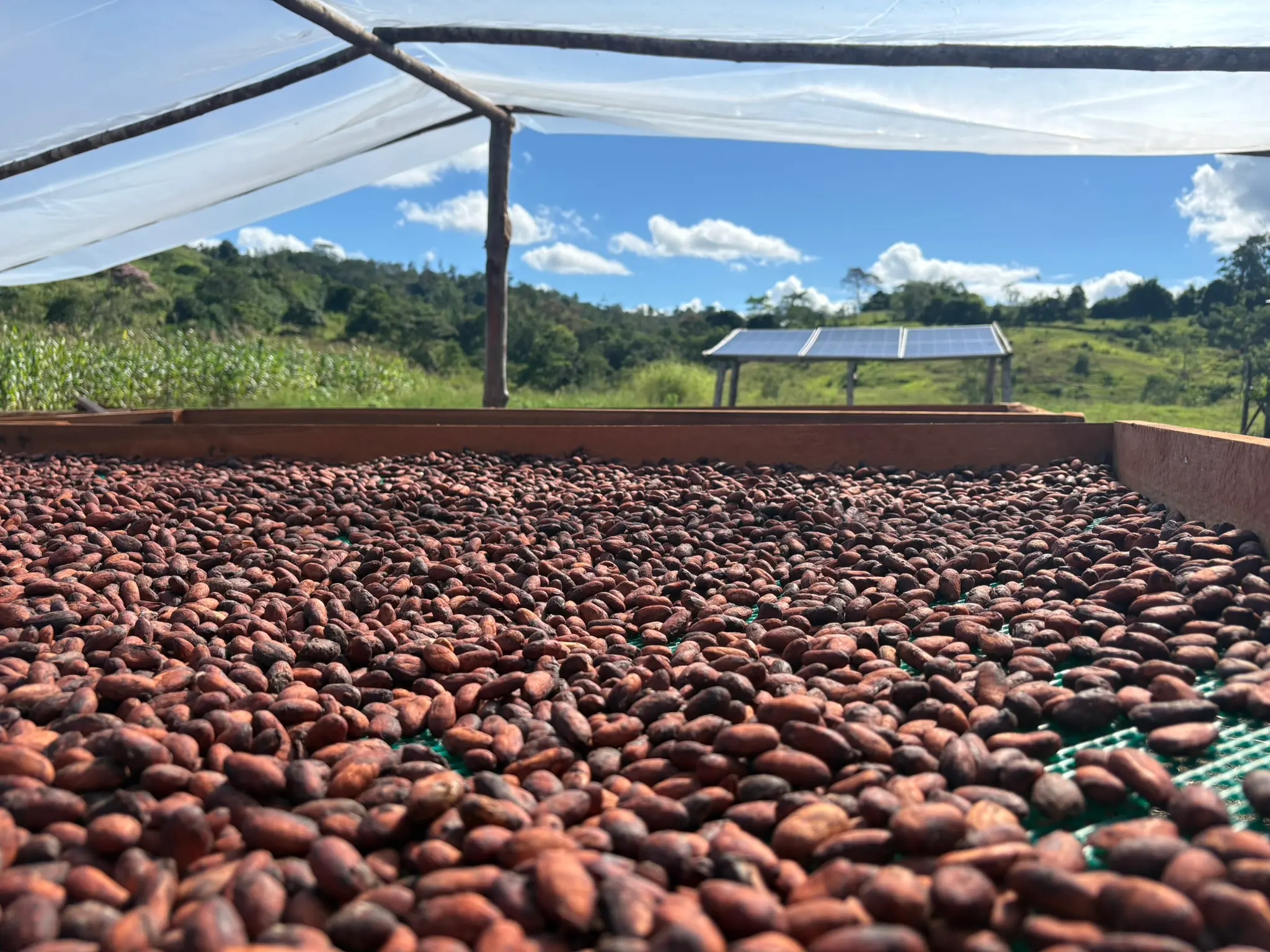
Beans dry on raised beds for 2–3 days to reach 6–7% optimal moisture. San Martín's slow sun locks in aromas without crusting. Not a passive step — it is the finishing stage of the bean.
4. Turning: the moment that changes everything
Turning — stirring the beans in the box — is not done randomly. In our process we do it at specific moments during the 6–7 days of fermentation to ensure:
5. Temperature: the invisible thermometer of flavor
During well-managed fermentation, the box interior can reach 45–50 °C. That heat is not an accident; it indicates that fermentation is active and the microorganisms are working. At that temperature, the bean's cellular tissues break down, allowing flavor precursors —free amino acids and reducing sugars— to become available for the next step: roasting.
6. From the box to the sun: the drying that locks in flavor
Once fermentation is complete, the beans go to sun drying for 2 to 3 days on raised beds to reach the optimal 6–7% moisture. San Martín's slow sun locks in aromas without crusting — and during drying, reactions continue that round out the final flavor profile.
Want to taste the result of this process?
Our 100% natural Cacao Paste is the purest expression of Fundo Maranatha's artisanal fermentation: no additives, no sugar, direct from the wooden box to your kitchen.
Order cacao paste See cacao paste →7. The result: a flavor that does not need sugar to shine
When fermentation and drying are done correctly, cacao develops a complex flavor profile: fruity, floral, chocolatey notes and, in fine aroma varieties, accents that recall red fruit, caramel or spices. Bitterness then stays secondary and balanced, never dominant.
This is the cacao of Fundo Maranatha. A cacao that, even in its purest form as dry beans or nibs, does not need sugar correction to be enjoyable. The process has done its work.
And that absence of added sugar makes it a natural ally for keto and vegan diets. If you want to understand why cacao fits these lifestyles so well, read our article: Cacao in the keto and vegan diet: the superfood you didn't know you could eat →
Fundo Maranatha: from our farm to your table
Artisanally fermented and sun-dried cacao in San Martín. No middlemen, no blends, with origin traceability in every batch.
Message us on WhatsApp Explore products →